
Golden Tides
Golden Tides represents a groundbreaking collaboration between Oceanus International and Climate Cleanup Foundation, pioneering the world’s first syntropic sargassum management system that transforms a coastal crisis into a climate solution.

Golden Tides
Syntropic Sargassum Management
Golden Tides represents a groundbreaking collaboration between Oceanus International and Climate Cleanup Foundation, pioneering the world’s first syntropic sargassum management system that transforms a coastal crisis into a climate solution.
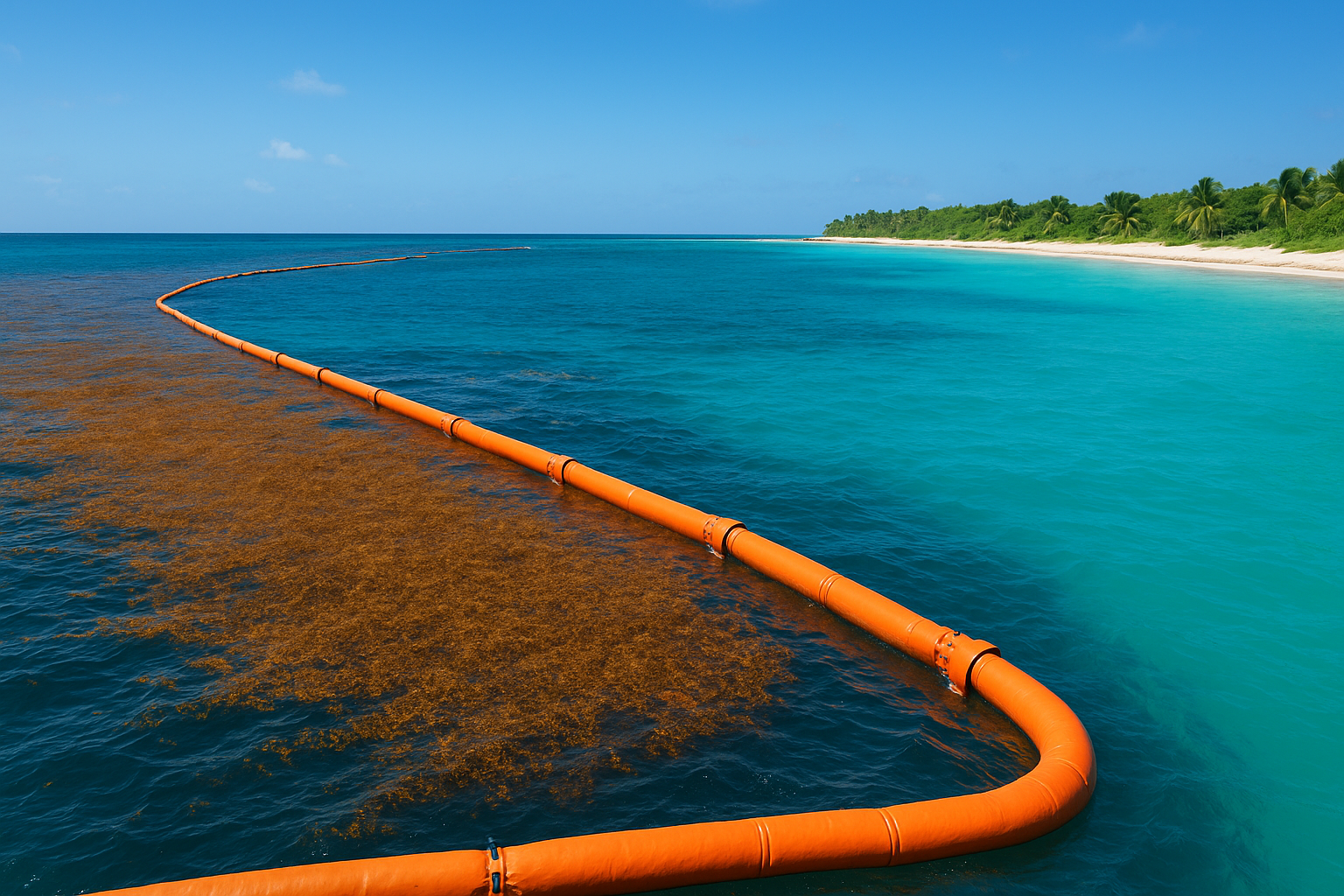
This innovative approach applies syntropic principles to marine environments, mimicking nature’s own processes by intercepting floating sargassum before it reaches vulnerable coastlines and facilitating its natural journey to the deep ocean where it sequesters carbon for centuries.
Syntropic Marine Management: Working With Nature’s Intelligence
Syntropic systems, unlike entropic ones, increase organization, complexity, and energy accumulation over time. While syntropic agriculture revitalizes degraded land by mimicking forest succession patterns, Golden Tides applies these same principles to ocean management, creating regenerative systems that enhance rather than deplete ecosystem health . By replicating natural sargassum lifecycles instead of fighting against them, Golden Tides converts a perceived problem into an ecological asset, allowing carbon sequestration to occur as nature intended.
Mimicking Nature’s Carbon Cycle
Over 95% of Atlantic sargassum naturally completes its lifecycle in the open ocean, sinking to depths where carbon remains sequestered for geological timescales. Golden Tides harnesses this natural process by intercepting sargassum destined for coastal environments and redirecting it to follow the same deep-ocean pathway that the vast majority of Atlantic sargassum already takes. Once sargassum reaches depths of 150-200 meters, hydrostatic pressure compresses its gas-filled bladders, rendering it negatively buoyant and enabling continued descent to the seafloor.
Protecting Dual Ecosystems: Coastal and Mesopelagic
Coastal Ecosystem Preservation
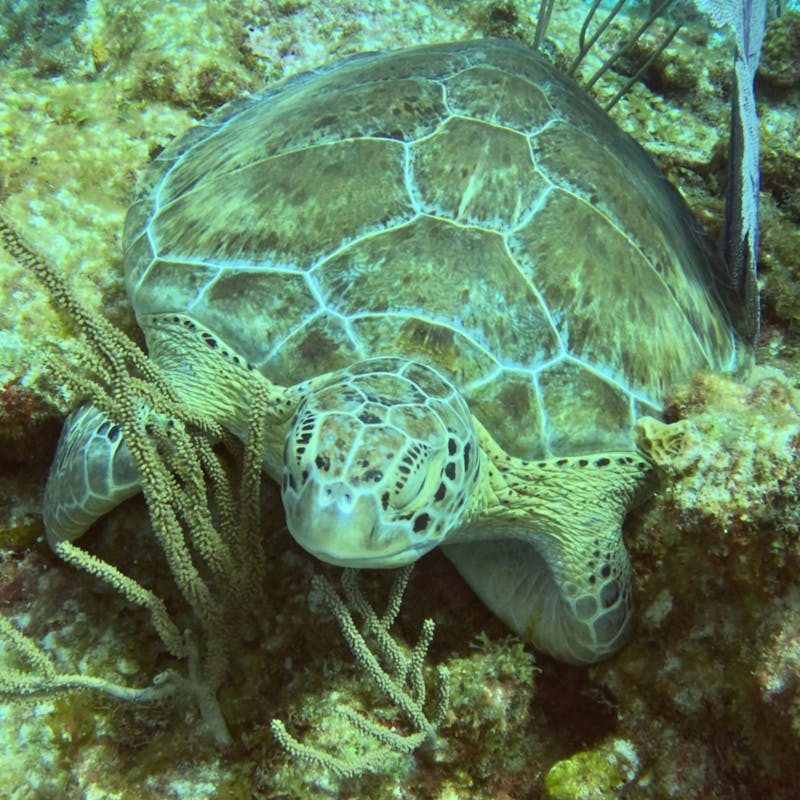
Traditional sargassum management devastates coastal environments through heavy machinery use, which compacts nesting beaches critical for endangered sea turtles and destroys fragile dune vegetation. When sargassum accumulates on beaches, it forms toxic hydrogen sulfide gas concentrations reaching 156 ppm—nearly 31 times above safe exposure levels for cleanup workers . The decomposing biomass also blocks vital sunlight from reaching seagrass beds and coral reefs, causing up to 80% reduction in coral growth rates.
Golden Tides eliminates these impacts entirely by preventing coastal accumulation through offshore interception using specialized marine containment systems. This proactive approach preserves critical nesting habitats for endangered species while maintaining water quality and ecosystem health.
Mesopelagic Zone Conservation
The mesopelagic zone, spanning depths of 200-1,000 meters, hosts an estimated billion tons of fish biomass and supports the largest animal migration on Earth through diel vertical movement patterns. This “twilight zone” serves as nursery habitat for countless marine species and forms the foundation of ocean food webs. Traditional coastal sargassum processing disrupts this delicate ecosystem by removing biomass that would naturally support deep-ocean life cycles.
Golden Tides preserves mesopelagic ecosystem integrity by maintaining sargassum within its natural oceanic habitat until the completion of its lifecycle. This approach supports the 83+ endemic species that depend on floating sargassum while ensuring continued nutrient cycling in deep-ocean environments.
Advanced Detection and Interception Technology
Predictive Modeling Systems
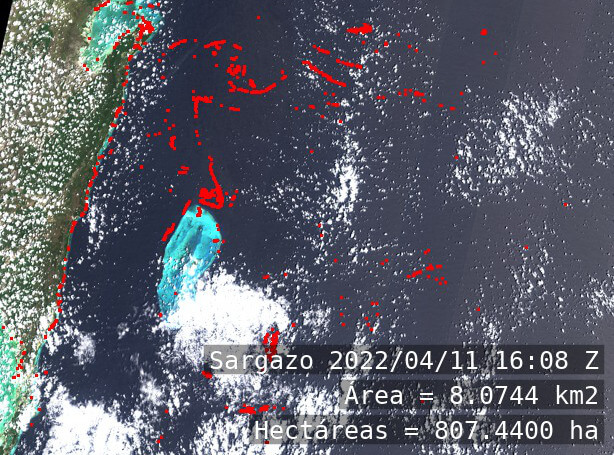
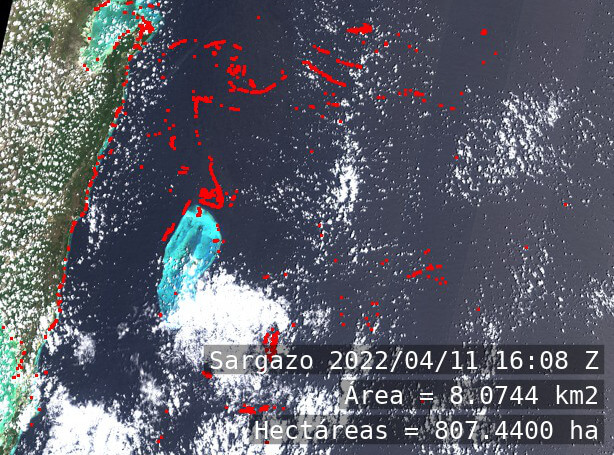
Oceanus International’s proprietary satellite monitoring networks provide 72-hour advance warnings of sargassum approach trajectories, enabling strategic deployment of containment systems. This early detection capability utilizes real-time satellite data and hydrodynamic modeling to forecast bloom movements across the Atlantic basin. The system has successfully tracked biomass events exceeding 13 million tons, demonstrating robust monitoring capabilities.
Floating Shorelines® Technology
The Golden Tides system employs Oceanus International’s patented Floating Shorelines® technology, which creates dynamic containment points that confuse sargassum into behaving as if it has reached the shore. These specialised barriers utilise marine-grade materials designed for long-term ocean deployment while minimising environmental impact. Electric, submersible pumping systems then transfer contained sargassum beyond the continental shelf where natural sinking processes can proceed.
Carbon Removal Quantification through Oncra Framework
Quantified Carbon Removal
Each metric ton of sargassum managed through Golden Tides prevents approximately 0.28 tCO₂e in methane emissions that would otherwise result from coastal decomposition. The biomass itself contains 30-35% carbon by dry weight, which becomes permanently sequestered when it naturally floats and sinks in deep-ocean environments exceeding 1,000 meters depth. This dual benefit—emission prevention plus active sequestration—creates measurable climate impact through natural processes .
Oncra Certification
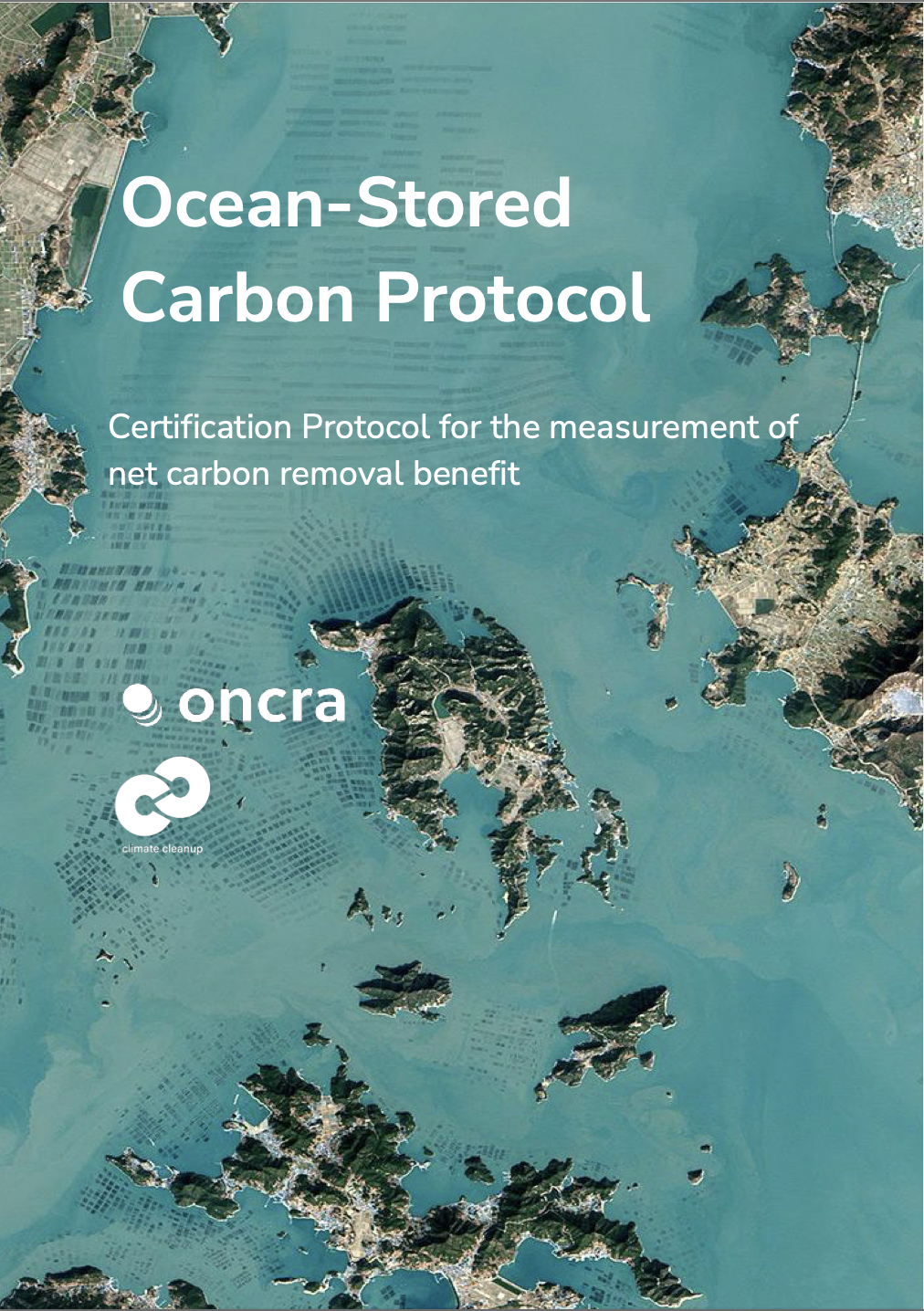
Climate Cleanup Foundation’s Open Nature Carbon Removal Accounting (Oncra) framework provides transparent, science-based verification of carbon removal achievements. This open-source system follows ISO standards for greenhouse gas accounting while enabling innovative nature-based solutions to access carbon credit markets. Oncra’s empirical crediting approach uses real-world data points to validate sequestration claims, ensuring environmental integrity and buyer confidence.
Operational Excellence and Economic Viability
The Golden Tides approach delivers superior environmental outcomes while reducing long-term operational costs compared to traditional beach cleanup methods. Proactive offshore interception eliminates the need for heavy machinery deployment, reducing labor requirements and infrastructure damage. Additionally, verified carbon removal credits generated through Oncra certification create revenue streams that can offset operational expenses and support coastal community adaptation.
Four years of deployment data from containment barrier systems in the Caribbean demonstrate the technology’s reliability and environmental safety, with no detectable increase in metallic trace elements in surrounding marine ecosystems. This extensive validation supports the scalability and sustainability of the Golden Tides approach across vulnerable coastlines throughout the Atlantic basin.
A Syntropic Future for Ocean Management
Golden Tides exemplifies the transformative potential of working with natural systems rather than against them. Like syntropic agriculture, which revitalizes land by mimicking forest succession dynamics, Golden Tides applies ecosystem intelligence to ocean management, creating positive feedback loops that enhance system health over time. By redirecting sargassum to follow its evolutionary pathway while generating climate benefits, this approach creates positive outcomes for coastal communities, marine ecosystems, and global climate stability. As extreme sargassum events continue to intensify due to climate change, syntropic solutions like Golden Tides offer sustainable alternatives to costly, environmentally destructive traditional management.
Syntropic Ocean Management Roadmap: 2025-2030
Building on established success, Golden Tides commits to a comprehensive research and development roadmap that will enhance our understanding of pelagic ecosystems while scaling our impact :
Phase 0: Feasibility & Scoping (2023-2024)
- Feasibility study
- Consortium preparation
- In situ sargassum collection and chemical sampling
- Valorisation option assessment
Phase 1: Baseline Research & Impact Assessment (2025-2026)
- Establish sentinel monitoring sites in deep ocean zones to track sargassum carbon sequestration rates and longevity
- Deploy ROV and autonomous sampling platforms to document deep-sea ecosystem responses to sargassum deposition
- Conduct isotopic tracing studies to map carbon flow from sargassum through deep ocean food webs
- Partner with oceanographic institutions to quantify impacts of redirected sargassum on mesopelagic biodiversity and nutrient cycling
Phase 2: Methodology Refinement & Scaling (2026-2027)
- Optimize sargassum sinking methodologies based on Phase 1 ecological impact data
- Develop standardized protocols for measuring carbon sequestration effects across varying ocean depths and conditions
- Create regional implementation blueprints tailored to specific coastal environments throughout the Caribbean and West Africa
- Advance remote sensing capabilities to improve early detection and quantification of sargassum biomass
Phase 3: Ecosystem Integration & Policy Framework (2028-2030)
- Integrate Golden Tides methodology into broader marine ecosystem management frameworks
- Develop science-based policy recommendations for international governance of open-ocean carbon sequestration
- Create comprehensive marine spatial planning tools incorporating sargassum management zones
- Launch global knowledge-sharing platform connecting sargassum-affected regions worldwide
Throughout all phases, Golden Tides will maintain rigorous transparency through open data sharing, peer-reviewed publication of findings, and continuous stakeholder engagement .This syntropic approach ensures that our carbon removal activities enhance rather than harm ocean ecosystems, creating regenerative systems that benefit all forms of life.
Contact our consortium to join and deploy sargassum management that heals ocean ecosystems while advancing climate goals.
Contact us


Technologies developed by Oceanus International – Carbon accounting certified through Oncra framework – Marine operations designed for ecosystem protection and restoration – Accounting protocol development enabled by WWF InnoFund – First phase field research enabled by MIIP Nederland Maritiem Land.