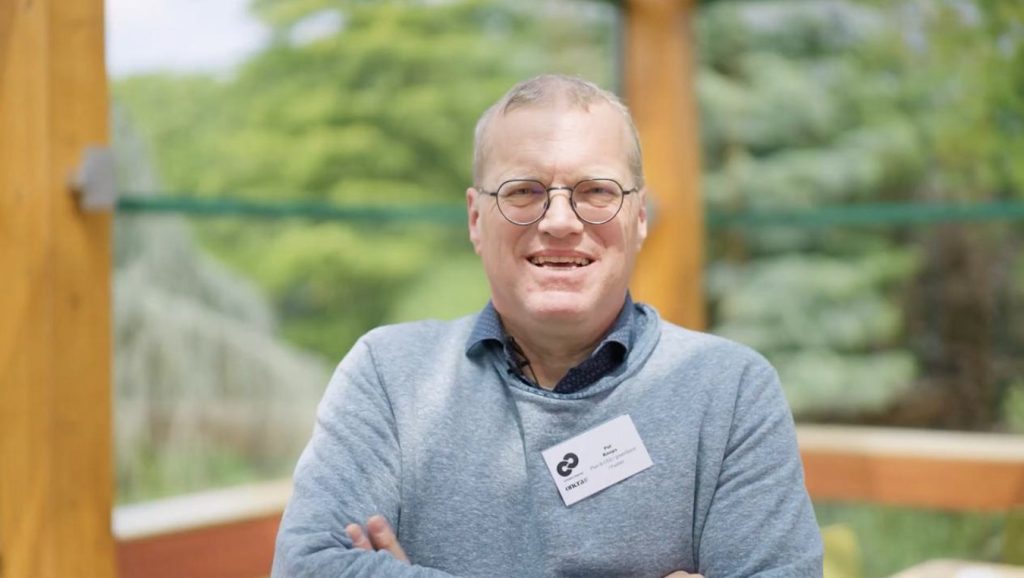

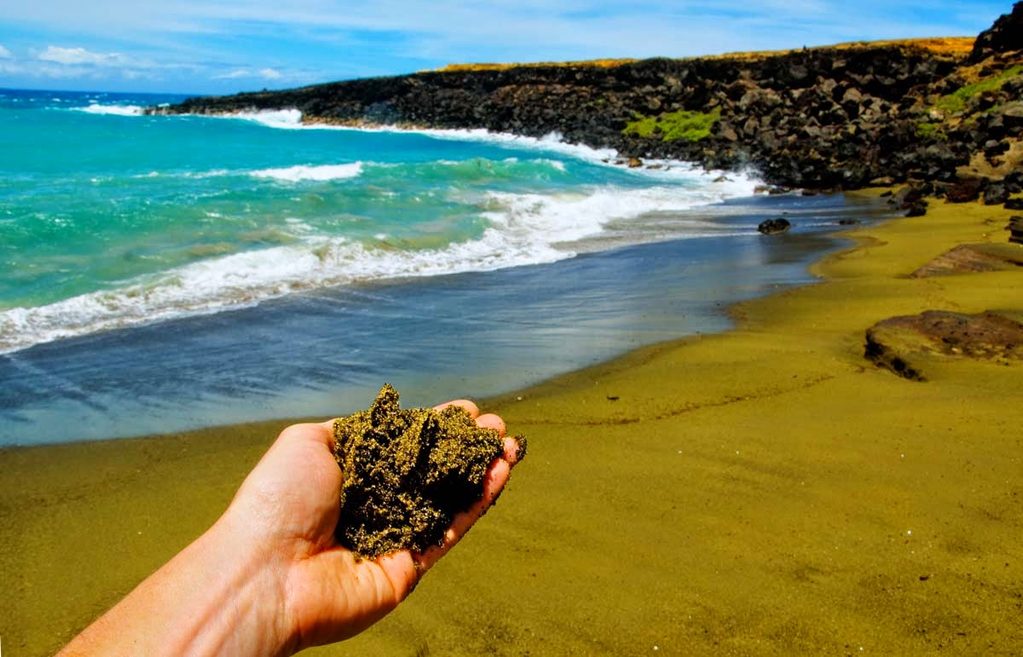
Pick up a handful of Pol Knops‘ life’s work. It looks like chalk dust: fine, soft, grey-green. You could let it run through your fingers. Inside the powder is carbon that has been removed from CO₂ and locked into mineral form.
The green mineral that turns carbon to stone
The material is called olivine. It sits in the earth’s mantle in quantities almost too large to imagine, and surfaces in mines across the world.
What makes it remarkable is its chemistry. When olivine comes into contact with CO₂, it reacts. The carbon is converted into a stable mineral form, where it can remain locked away for geological timescales.
In nature, this happens over centuries. A thousand years, sometimes more. In climate terms, however, that is far too slow to make a difference. Closing that gap between what olivine can do and how slowly it does it has occupied Knops for the past fifteen years.
Guided coincidence
He came to it sideways. Knops studied physics, then spent his first decade after university treating sewage sludge at an industrial plant in Apeldoorn. That plant ran high-pressure, high-temperature reactors, and he learned them inside out.
He calls what happened next “guided coincidence.” Through his work he met Olaf Schuiling, a geologist who’d spent decades promoting olivine as a climate solution. Schuiling introduced him to a small group who wanted to spread the mineral on cycle paths and farmland, letting rain do the slow work. That group would go on to become GreenSand.
Knops saw a different path. Researchers in the United States had already experimented with accelerating the reaction using heat and pressure. The chemistry worked. Turning it into a practical process was another matter. Knops had spent ten years building the kind of reactors that might make the process practical.
Fifteen years of explaining why CO₂ removal matters
What followed was not a straight line. A biofuel plantation in Africa went bankrupt when the investor pulled out. A business partner left after three years. A PhD collaborator who’d joined him at KU Leuven finished his thesis and moved back to Canada. There were detours into asbestos chemistry (another mineral that reacts with CO₂) that proved harder to scale than expected.
And through it all, there were years of explaining CO₂ removal to people who looked at him blankly and asked why it would ever be necessary.
In 2017, Knops emailed Sven Jense at Climate Cleanup proposing a national platform for “CO₂ as raw material.” Together they put a formal proposal to the Ministry of Economic Affairs. The concept didn’t quite land: CO₂ was something to reduce, not to collect and use. Four years later, in 2021, Knops co-founded Paebbl with Marta Sjogren, Andreas Saari and Jane Walerud. Today, that vision is moving towards economic scale.
Heat, pressure, stone
Paebbl now has around seventy employees and operates a demonstration plant in Rotterdam. It uses CO₂ captured from biogas installations, and in the future also from direct air capture. The CO₂ goes into a pressurised reactor with crushed olivine. Heat. Pressure. The process produces roughly three tonnes of mineral product for every tonne of CO₂ converted.
That powder can also replace part of the cement in concrete, one of the most CO₂-intensive materials on earth. The result is a double benefit: CO₂ is permanently mineralised, while the resulting material can replace part of the cement used in construction.
A commercial plant is planned for 2028. Paebbl has set itself a long-term target of removing one gigaton of CO₂. “Technically, it works,” Knops says. “So let’s stop talking and do more.”
For Knops, after fifteen years of experiments, setbacks and detours, the question is no longer whether the chemistry works. It is whether they can make it work at scale, as various projects across Europe are now demonstrating.
Future developments
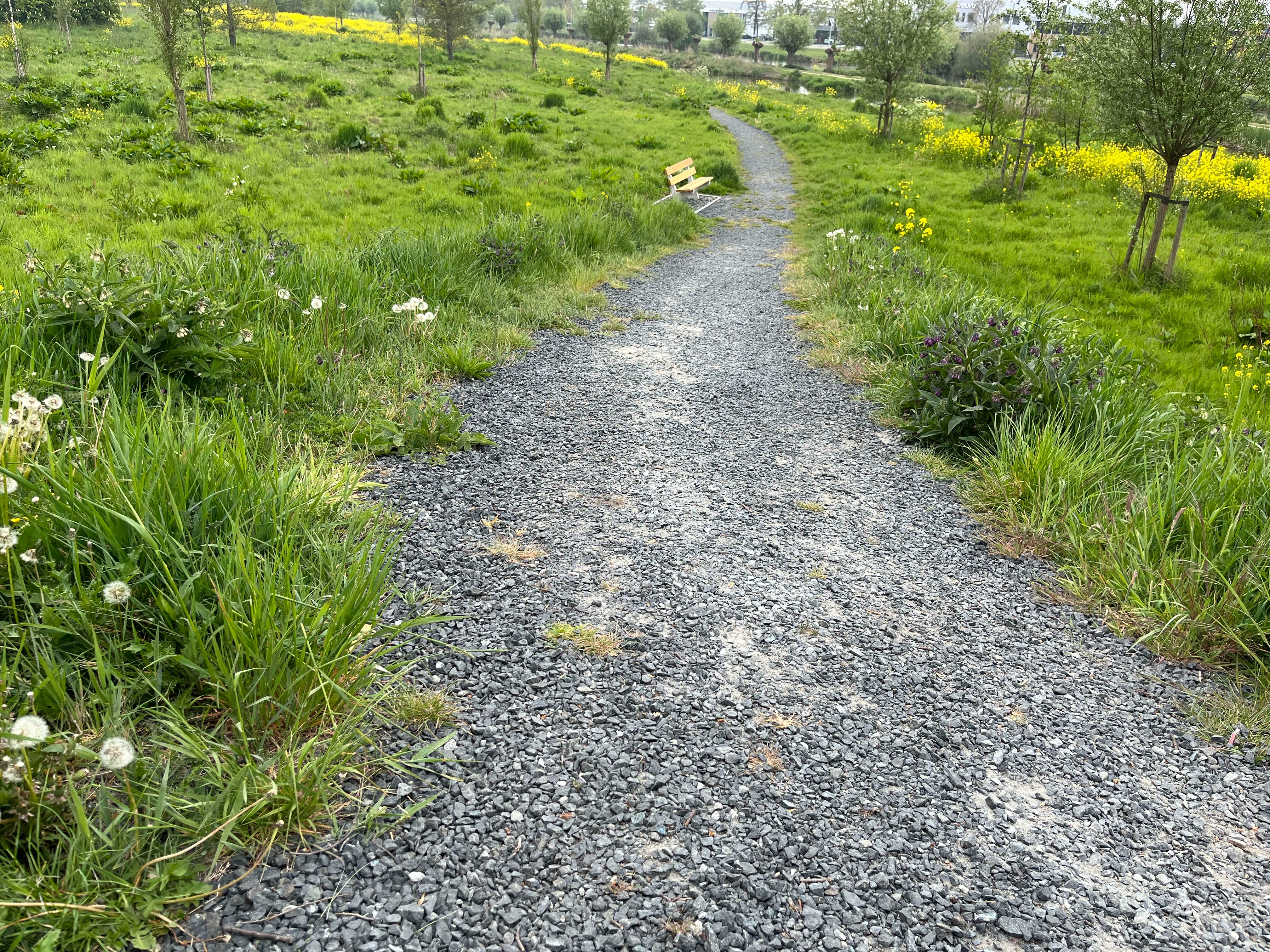
For GreenSand, too, the question is no longer whether the chemistry works, but how to convince people to use the mineral at more sites: railways, roads, footpaths, golf courses and more. Climate Cleanup has been tremendously helpful with independent certification, which converts the use of the material into tonnes of CO2 removed, with the help of various people at Climate Cleanup and Oncra.
Meanwhile, there is slowly room for new sustainable ideas, such as enhancing the growth and use of diatoms (thanks to Sam) and PFAS destruction. These are still in the innovation stage and will need time to scale up in a way that is both economically and environmentally sustainable.
Pol Knops is co-founder and was CTO of Paebbl, one of the carbon removal pioneers.