
The point where life returns
UNEP says overshooting 1.5°C is now unavoidable. The graphs show the line that has to come down. Here is the line that has to come up, and the people already drawing it.


What's shipping. What's about to. Who's joining. The journey since 2018, in entries.
UNEP says overshooting 1.5°C is now unavoidable. The graphs show the line that has to come down. Here is the line that has to come up, and the people already drawing it.
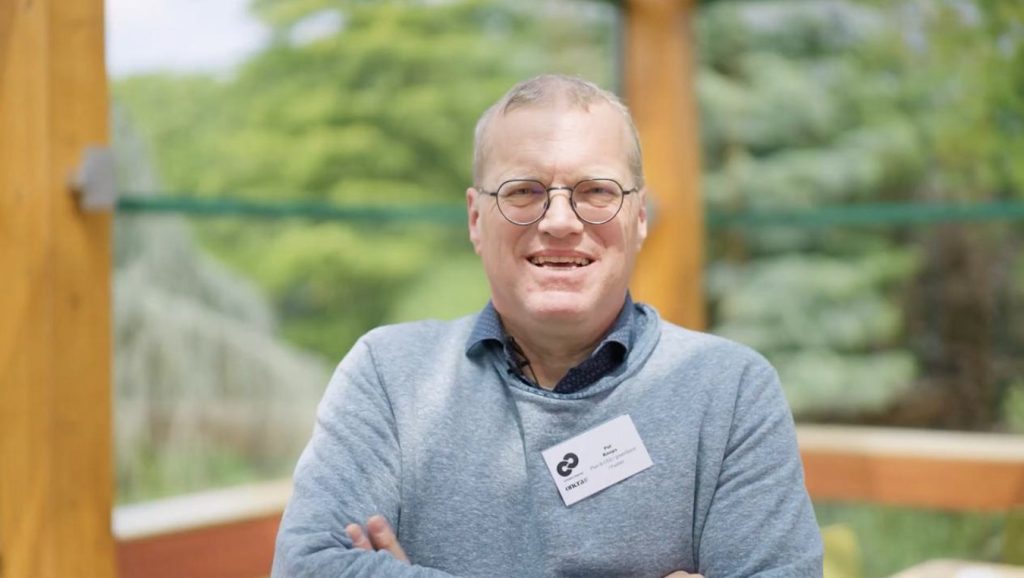
Pick up a handful of Pol Knops‘ life’s work. It looks like chalk dust: fine, soft, grey-green. You could let it run through your fingers. Inside the powder is carbon that has been removed from CO₂ and locked into mineral form. The green mineral that turns carbon to stone The material is called olivine. It…
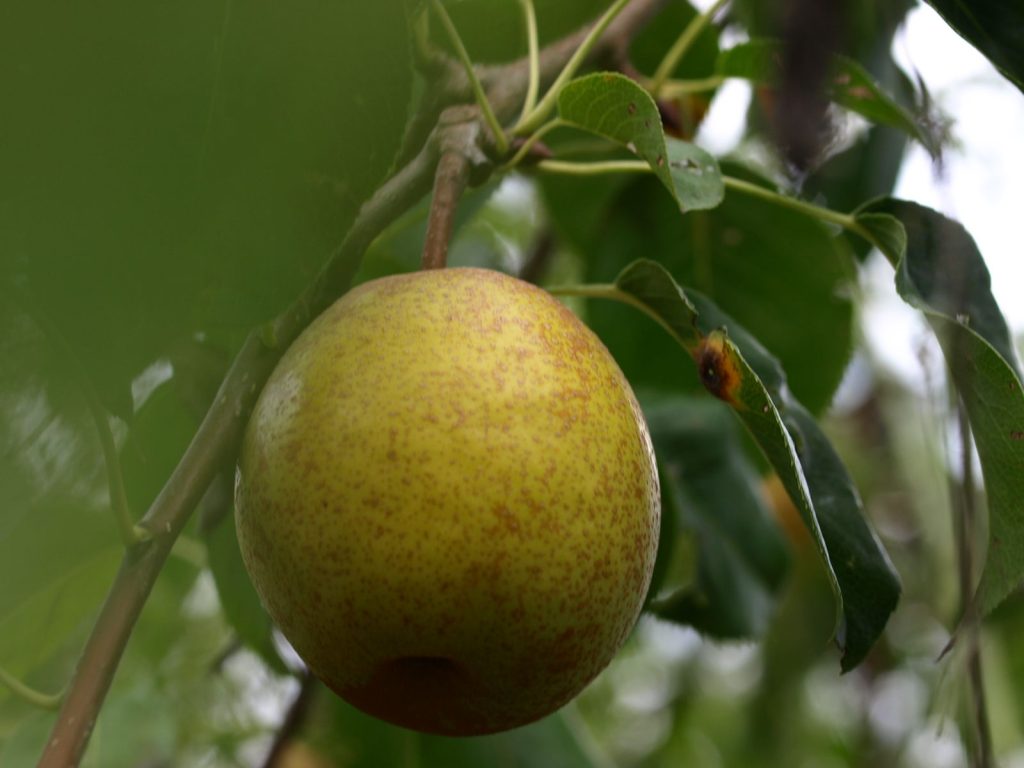
Two studies published in July 2026 suggest that agroforestry systems may be better able to withstand heat and drought than farming systems without trees. What 60 experts expect In a study published in Agronomy for Sustainable Development, 60 agroforestry experts took part in an online survey on how different agroforestry systems across Europe are performing…
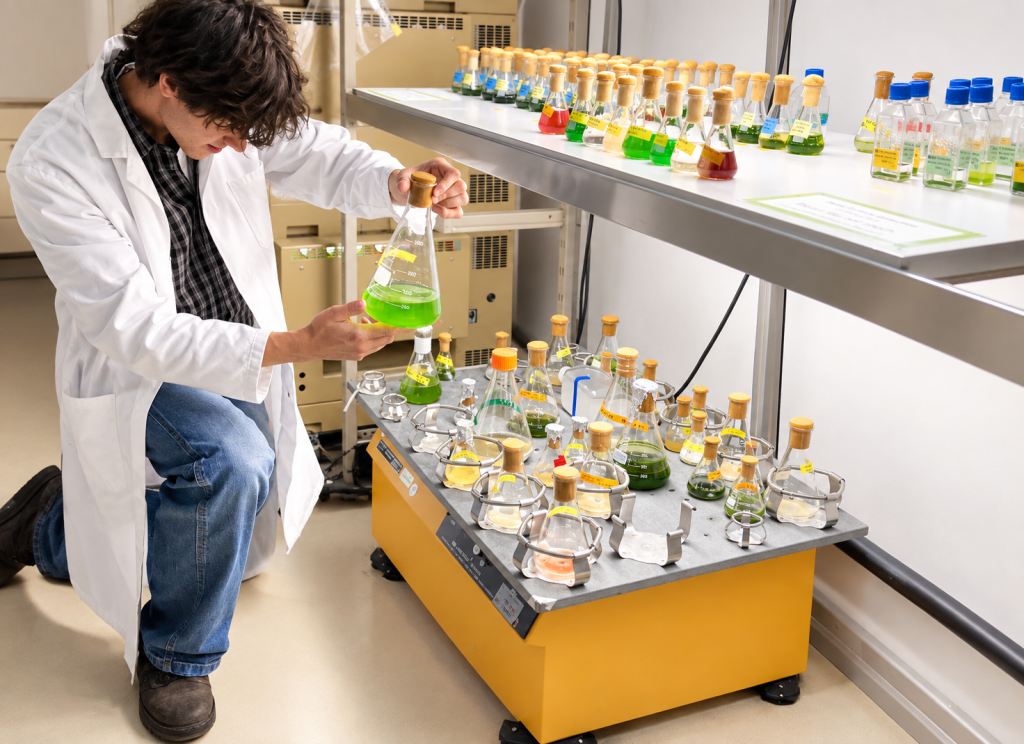
Climate Cleanup intern Sam Spence is testing whether carbonated olivine can help grow diatoms, bringing two natural carbon cycles together in a potential new pathway for ocean carbon removal.
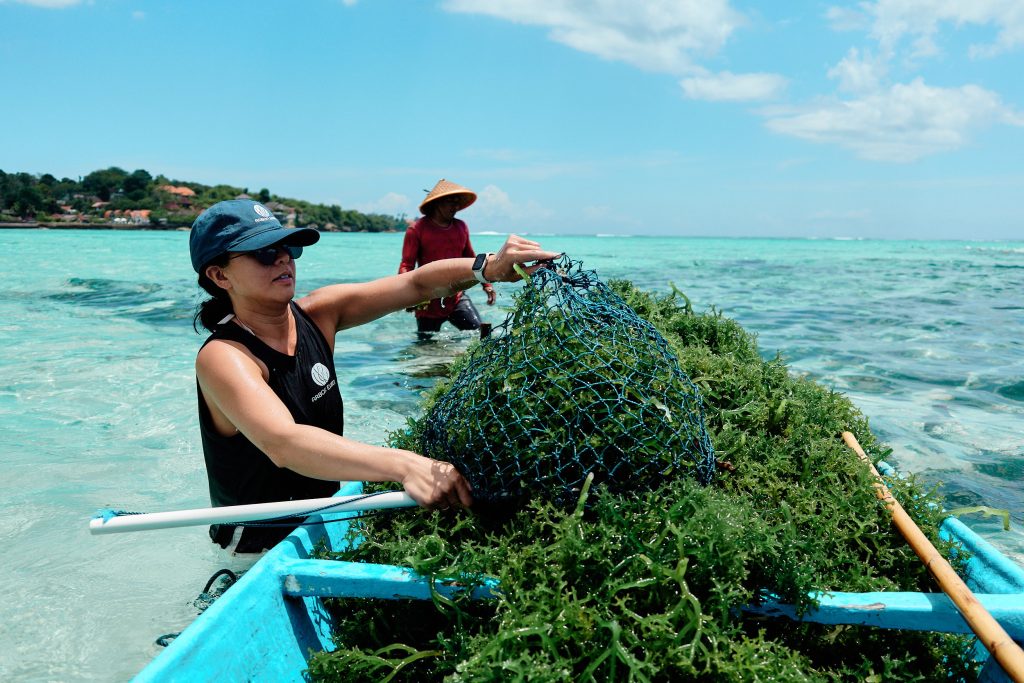
Swedish climate company Arbon Earth, part of the Climate Cleanup Network, is the first company to receive official approval in Indonesia for deep-sea marine carbon dioxide removal, using seaweed to store carbon on the ocean floor.

The case for building with wood usually starts with carbon. A new report from ORGA architect, funded by Built by Nature, maps a second argument: what timber and other biobased materials do for the health of the people inside.

Milestone
AI can now improve its own code because it gets a fast, honest answer to the question 'did that work?'. Living nature has no such answer yet. The Life Box, a small solar-powered sensor on a post, is our attempt to give it one.

Milestone
On 16 June, more than 200 leaders from government, business, science and civil society gathered in Baarn for the National Summit on Nature-Based Carbon Removal. Organised by Climate Cleanup together with Oncra and the provinces of Gelderland, Utrecht, Noord-Holland, Zuid-Holland, Noord-Brabant and Drenthe, the summit focused on one central question: how do we accelerate the…

Can a festival leave a landscape better than it found it? From April 30 to May 3 2026, 140 people gathered in the tiny Portuguese village of Cidadelhe. Not just to dance and listen, but above all to dig. Over a few mornings, they built 69 Smilands together: small landscape interventions that hold rainwater and…

When Hajna talks about her work, two things come through quickly: she loves data, and she believes in frontrunners. As one of the people behind Oncra‘s (carbon credits certification platform, initiated by Climate Cleanup) Land Stored Carbon certification, she helps farmers, including food foresters and land stewards, quantify what their land is doing for the…

By Tamara Szilágyi-Hajdú, May 2026MA Gender Studies | BSocSC Politics and International Relations Tamara wrote this piece as part of her thesis research, conducted during her time at Climate Cleanup. Introduction The concept of climate justice points out that climate change is a symptom of a system of oppression, a system of extraction and exploitation for…

Dutch farmers are increasingly turning to the Paulownia tree — also known as Kiri wood — for its fast growth, high timber yield, and the extra income it generates through verified CO₂ certificates. Unlike traditional crops, Paulownia can be harvested after just 8 to 10 years, and the tree regrows straight from the stump, offering…

Robert Pol is 62 years old, married, and the father of thirty-year-old twins. He works as a senior innovator at Van Aalsburg, a family business now in its third generation. “A wonderful title,” he calls it himself. His work? Developing new products based on willow. “When I was six years old, I already wanted to…

Somewhere off the coast of Mexico, a vessel moves slowly through open water. It’s not fishing. It’s not surveying. It’s hunting seaweed. Why? To take carbon out of the atmosphere, while buying fragile coastlines a little more time. That vessel is the latest chapter in a story that started 25 years ago, underwater. A career…

An interview with Laura Rooseboom, board member at Climate Cleanup From “boring finance” to meaningful impact “I used to work in traditional asset management,” Laura Rooseboom says with a smile. “Investing in everything and anything. But honestly? I found it quite boring.” What she was missing was purpose, and innovation. Not just new ideas, but…

What does it take to transform the way we build, grow food, and relate to the planet? In this conversation, Jelle de Bijl (Certification Manager at Construction Stored Carbon) and Gijs Tolmeijer (Business Developer for both Climate Cleanup and Oncra), both working at Climate Cleanup, sit down to talk about their work, what drives them,…

What if the problem is not that we don’t know enough, but that we’ve forgotten how to truly see? For Marie-Claire Greve, photographer and long-time ambassador for Climate Cleanup, the starting point is not urgency, but attention. Not crisis, but connection. And, more fundamentally, a renewed sense of value. “The moment people begin to feel…

Coming back from the European Carbon Farming Summit in Padua on 17-19 March, one thing is clear: carbon farming and certification are entering a new phase. The conversation is shifting: from pilots and promises to systems, standards, and scalability. Hajna Tijssen from Oncra noted down a few reflections of the summit: 1. Carbon farming as…

Bamboo Village Uganda develops several bamboo afforestation projects in Uganda. Bamboo acts as a natural carbon sink: it removes CO2 emitted from the atmosphere and stores it in the soil and the plant. The benefits of Bamboo Village Uganda’s project extend beyond environmental impact. The project actively invests in the local community and generates a…

Woody Builders creates commercial buildings that work with nature instead of against it. Using wood, technology and bio-based materials, they design structures that store CO₂, reduce emissions and offer healthier, more inspiring places to work and live. Thanks to their Oncra certification, their wooden designs are not only environmentally sustainable, but also financially sound and future-proof, giving…

Milestone
Last week, our Construction Stored Carbon lead Sacha was in Brussels to attend the EU Expert Group on Carbon Removals. Under the Carbon Removals and Carbon Farming (CRCF) Regulation, the EU will enforce certification methodologies for permanent carbon removals (1), carbon farming (2) and carbon storage in (building) products (3). These methodologies are developed in…

The European Commission has opened public consultation on the draft rules for certifying carbon farming across the EU: the Carbon Removals and Carbon Farming Regulation (CRCF). This is your chance to shape how farmers and foresters get certified and paid for storing carbon. Feedback deadline: 19 February 2026 on the EU’s “Have Your Say” portal….

Milestone
To maximise the amount of carbon your store in a biobased building, it is key to calculate the carbon storage of different designs quickly, easily and accurately. Having an accurate and understandable calculation method also enables everyone in the value chain, from developer to tendering municipality, to set clear goals. These two worlds, of design and goal-setting,…

Tijdens de eerste koolstofvastleggingstafels brachten we ondernemers, marktpartijen, beleidsmakers, investeerders en experts samen om te verkennen hoe we koolstofvastlegging met natuurgebaseerde oplossingen kunnen opschalen op Nederlandse bodem. De energie was hoog en de bereidheid om samen door te pakken is groot. Hieronder delen we de belangrijkste uitkomsten van de werksessies en de vervolgstappen. Uitkomsten werksessies…